Explore how public sculpture shapes urban identity
Look beyond monument and landmark to see how placement, use, maintenance, and memory build a public work’s meaning.
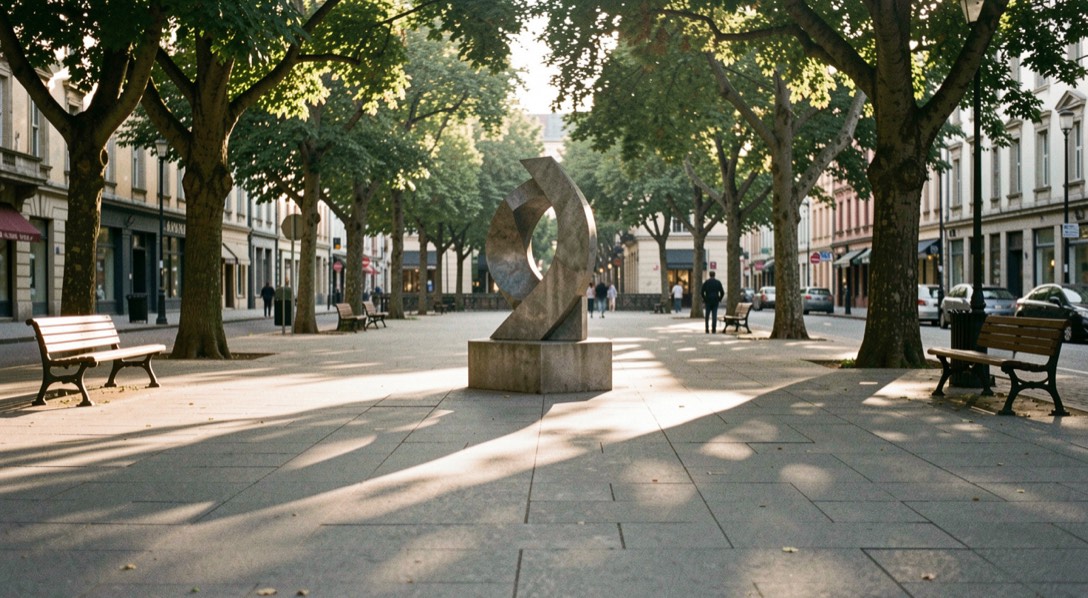
Public sculpture is never encountered in a neutral room. Weather, traffic, seating, protest, maintenance, and daily shortcuts all become part of the work’s public life. To read it well, start with the site as an active condition rather than treating the sculpture as an object that has simply been placed there.
Watch the route
Observe how people move around the work. Does it interrupt a path, create a meeting point, or become part of the background? A sculpture’s social role can be found in these small negotiations, not only in its intended symbolism.
Name the competing histories
A public work can carry the history of its commission and the history of the place where it stands. Those histories may align or conflict. Ask which stories are made visible, which remain absent, and how the material form supports or complicates the official account.
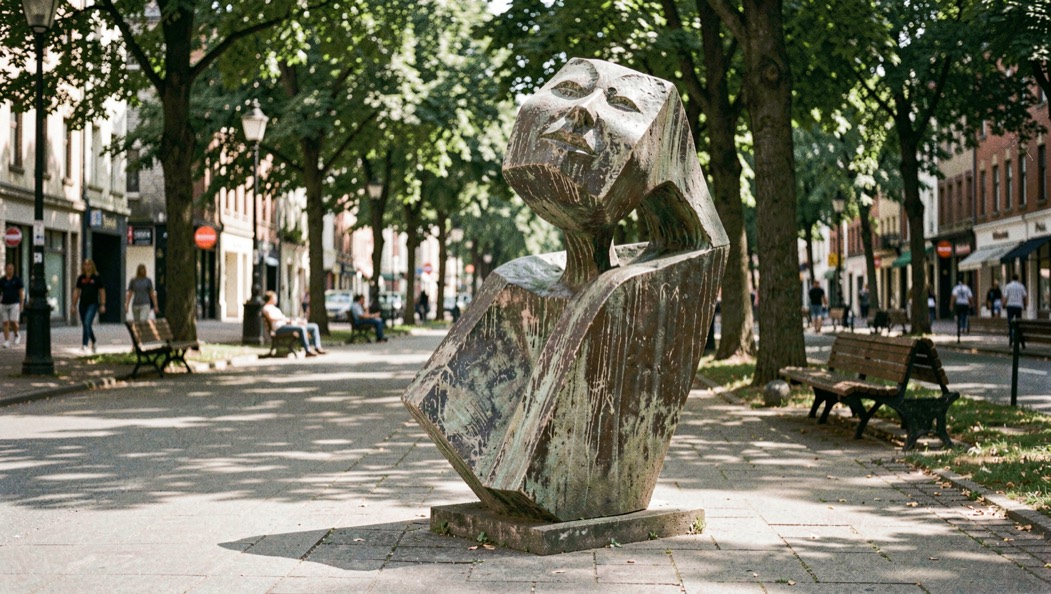
Include care
Paint, stone, metal, and sound change under public conditions. Maintenance is not a footnote: it reveals what a city is willing to protect, adapt, or let weather. Treating care as part of the work’s meaning makes the essay more precise and less dependent on monument language.
Public sculpture has at least two locations: the physical site and the set of routes through which people understand that site. A work beside a station is encountered in transit; one in a square may become a meeting point, a shortcut obstacle, or a surface for seasonal decoration. Describe these uses before assigning the broad word identity. The detail of a route is often more persuasive than a claim that the object represents a whole city.
Official public-art guidance repeatedly treats context as part of commissioning. Dorset describes public art broadly, including temporary and integrated works, and links it to place and community. Newcastle’s public-art pages likewise describe streets and everyday public spaces as active conditions. These are not universal definitions, but they support a careful reading: location is not a neutral backdrop, and the social life of a work cannot be reduced to its silhouette.
Maintenance gives the argument a material test. Birmingham notes that outdoor works face weather, wear, vandalism, redevelopment, relocation, and possible removal. A council procedure from Eastleigh stresses that maintenance is object-specific and may require specialist skills. Ask who cleans, repairs, inspects, insures, or eventually decommissions the work. Those responsibilities reveal the practical values attached to the sculpture and may alter how the public encounters it over time.
The historical question should remain plural. A commission may tell one story about a site, while residents, campaigners, workers, or visitors carry another. Look for plaques, naming, sightlines, missing voices, and later adaptations without claiming to speak for a community you have not researched. The strongest essay can hold formal observation, administrative record, and contested memory together, then make clear which part is documented and which part is an interpretation.
Observe first, name the decision, then test the interpretation against the whole work.
Method note. This reading is an editorial guide, not a report of a private visit or a promise about a market outcome. The Ochre Editorial Desk works to this standard. See the editorial policy for the standard used across the magazine.
Research notes
Sources for this reading
The article uses original editorial language and the following references for definitions, context, or method. They are linked for verification, not reproduced.
Next readings
Follow the thread
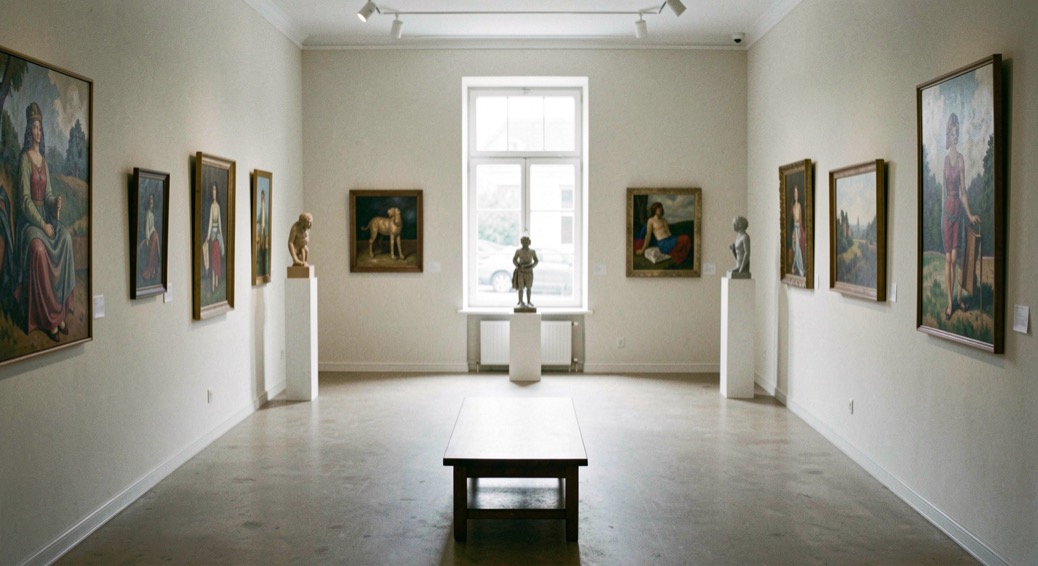
Review a group show that rewards slow looking
A method for reading the conversation between works, rooms, pauses, and the visitor’s own pace.

Question the role of the art critic in a digital age
A practical essay on authority, description, audience reach, and the responsibility to make an argument inspectable.
Community life in one town: a year in Brandon
A calm guide to community life in one town, from the yearly calendar and free family activities to volunteering, membership, parks and local traditions.